If you’re seeking guidance on how to honor and care for God’s creation, this resource is designed specifically for you. The Bible contains powerful teachings about our responsibility toward the natural world. Today, we’re sharing carefully selected Bible verses that illuminate what Scripture says about respecting creation. These verses will deepen your understanding of our role as stewards and help you grasp the biblical perspective on environmental care and appreciation for God’s handiwork.
Introduction
Dear friends, when we think about respecting God’s creation, we’re really touching on a core part of our faith. Ever since God placed humans in the garden, He entrusted us with a special responsibility. Our role wasn’t to overpower and destroy but to nurture and care for what He lovingly shaped.
Creation communicates with us every day. Whether it’s the vibrant colors of a sunset, the towering majesty of a mountain, or the intricate beauty of a butterfly’s wings, we’re seeing glimpses of God’s nature. His creativity, strength, and love are woven throughout the world around us. Ignoring this isn’t just an environmental oversight—it’s a spiritual one. It’s like disregarding a heartfelt message from God.
We have a significant responsibility on this earth. God didn’t give us control to misuse and deplete resources. He entrusted us with the task of managing wisely and safeguarding His creation. When we treat animals kindly, use resources thoughtfully, and consider the legacy we leave for future generations, we’re showing honor to our Creator.
This isn’t about extreme measures or losing sight of balance. It’s about understanding that caring for the world is a form of worship. When you recycle, plant a tree, or avoid pollution, you’re saying to God, “I value what You’ve made.” These small acts are more meaningful than they seem because they come from a heart that loves God.
Scripture warns us of the consequences when we neglect our duty. Taking without giving back leads to destruction, a reality we can see in our world today. However, God always offers us a path to restoration, a chance to mend what has been damaged.
So let’s reflect on this: are we living as faithful stewards, or are we acting carelessly? Our answer affects not only the world around us but also our inner selves.
Biblical Foundation for Environmental Stewardship
From the very beginning, the Bible establishes a deep connection between humanity and the earth. We are called to care for this world, which reflects God’s handiwork. This stewardship isn’t just a responsibility but a privilege, allowing us to participate in God’s ongoing creation. By nurturing the environment, we honor the Creator and fulfill our role in His divine plan.
“God said, Let us make man in our image, after our likeness: let them have dominion over the fish of the sea, over the fowl of the air, over the cattle, over all the earth, over every creeping thing that creepeth upon the earth”— Genesis 1:26

“The Lord God took the man, put him into the garden of Eden to dress it to keep it”— Genesis 2:15
“Thou madest him to have dominion over the works of thy hands; thou hast put all things under his feet”— Psalm 8:6
“The land shall not be sold for ever: for the land is mine, for ye are strangers sojourners with meAnd in all the land of your possession ye shall grant a redemption for the land”— Leviticus 25:23-24
“The earth mourneth fadeth away, the world languisheth fadeth away, the haughty people of the earth do languishThe earth also is defiled under the inhabitants thereof; because they have transgressed the laws, changed the ordinance, broken the everlasting covenantTherefore hath the curse devoured the earth, they that dwell therein are desolate: therefore the inhabitants of the earth are burned, few men left”— Isaiah 24:4-6
“A land which the Lord thy God careth for: the eyes of the Lord thy God are always upon it, from the beginning of the year even unto the end of the year”— Deuteronomy 11:12
How God’s Creation Reveals His Character and Power
Every part of creation, from the vastness of the skies to the intricacy of a single flower, tells us something about God’s nature. Through the beauty and complexity of the world, we can glimpse His majesty, creativity, and might. As we appreciate these wonders, we’re drawn closer to understanding His divine essence and love for His creation.
“For the invisible things of him from the creation of the world are clearly seen, being understood by the things that are made, even his eternal power Godhead; so that they are without excuse”— Romans 1:20
“The heavens declare the glory of God; the firmament sheweth his handywork”— Psalm 19:1
“But ask now the beasts, they shall teach thee; the fowls of the air, they shall tell theeOr speak to the earth, it shall teach thee: the fishes of the sea shall declare unto theeWho knoweth not in all these that the hand of the Lord hath wrought this?In whose hand is the soul of every living thing, the breath of all mankind”— Job 12:7-10
“Lift up your eyes on high, behold who hath created these things, that bringeth out their host by number: he calleth them all by names by the greatness of his might, for that he is strong in power; not one faileth”— Isaiah 40:26
“Fear ye not me? saith the Lord : will ye not tremble at my presence, which have placed the sand for the bound of the sea by a perpetual decree, that it cannot pass it: though the waves thereof toss themselves, yet can they not prevail; though they roar, yet can they not pass over it?”— Jeremiah 5:22
“Thou, even thou, art Lord alone; thou hast made heaven, the heaven of heavens, with all their host, the earth, all things that are therein, the seas, all that is therein, thou preservest them all; the host of heaven worshippeth thee”— Nehemiah 9:6
The Responsibility of Humans as Caretakers of the Earth
God has entrusted us with the care of His creation, making us stewards of the earth. This role involves more than just using resources wisely; it requires a loving commitment to protect and preserve the environment. As caretakers, we are called to act with integrity and respect, ensuring that future generations can enjoy and benefit from God’s gifts.
“God blessed them, God said unto them, Be fruitful, multiply, replenish the earth, subdue it: have dominion over the fish of the sea, over the fowl of the air, over every living thing that moveth upon the earth”— Genesis 1:28
“A righteous man regardeth the life of his beast: but the tender mercies of the wicked are cruel”— Proverbs 12:10
“Seemeth it a small thing unto you to have eaten up the good pasture, but ye must tread down with your feet the residue of your pastures? to have drunk of the deep waters, but ye must foul the residue with your feet?”— Ezekiel 34:18
“The Lord shall guide thee continually, satisfy thy soul in drought, make fat thy bones: thou shalt be like a watered garden, like a spring of water, whose waters fail not”— Isaiah 58:11
“O Lord , how manifold are thy works! in wisdom hast thou made them all: the earth is full of thy riches”— Psalm 104:24
“I brought you into a plentiful country, to eat the fruit thereof the goodness thereof; but when ye entered, ye defiled my land, made mine heritage an abomination”— Jeremiah 2:7
“The nations were angry, thy wrath is come, the time of the dead, that they should be judged, that thou shouldest give reward unto thy servants the prophets, to the saints, them that fear thy name, small great; shouldest destroy them which destroy the earth”— Revelation 11:18
Bible Verses on Caring for Animals and Nature
The Bible teaches us to respect all living things as part of God’s creation. Animals and nature reflect His glory and are deserving of our care and compassion. By treating them with kindness and consideration, we fulfill God’s command to love and nurture every aspect of His world, recognizing their intrinsic value and purpose.
“Be thou diligent to know the state of thy flocks, look well to thy herds”— Proverbs 27:23
“Thou shalt not muzzle the ox when he treadeth out the corn”— Deuteronomy 25:4
“He giveth to the beast his food, to the young ravens which cry”— Psalm 147:9
“Knowest thou the time when the wild goats of the rock bring forth? or canst thou mark when the hinds do calve?Canst thou number the months that they fulfil? or knowest thou the time when they bring forth?They bow themselves, they bring forth their young ones, they cast out their sorrowsTheir young ones are in good liking, they grow up with corn; they go forth, return not unto them”— Job 39:1-4
“Are not five sparrows sold for two farthings, not one of them is forgotten before God?”— Luke 12:6
“Should not I spare Nineveh, that great city, wherein are more than sixscore thousand persons that cannot discern between their right hand their left hand; also much cattle?”— Jonah 4:11
“I, behold, I establish my covenant with you, with your seed after youAnd with every living creature that is with you, of the fowl, of the cattle, of every beast of the earth with you; from all that go out of the ark, to every beast of the earth”— Genesis 9:9-10
Dominion vs. Stewardship: Understanding God’s Command
God’s directive to have dominion over the earth is often misunderstood. True dominion is about stewardship, not exploitation. It involves taking responsibility to manage and care for creation wisely. As we balance our use of resources with a deep respect for God’s handiwork, we fulfill His command in a way that honors Him and sustains the world.
“God said, Behold, I have given you every herb bearing seed, which is upon the face of all the earth, every tree, in the which is the fruit of a tree yielding seed; to you it shall be for meatAnd to every beast of the earth, to every fowl of the air, to every thing that creepeth upon the earth, wherein there is life, I have given every green herb for meat: it was so”— Genesis 1:29-30
“Thou madest him to have dominion over the works of thy hands; thou hast put all things under his feetAll sheep oxen, yea, the beasts of the fieldThe fowl of the air, the fish of the sea, whatsoever passeth through the paths of the seas”— Psalm 8:6-8
“For by him were all things created, that are in heaven, that are in earth, visible invisible, whether they be thrones, or dominions, or principalities, or powers: all things were created by him, for him”— Colossians 1:16
“Moreover it is required in stewards, that a man be found faithful”— 1 Corinthians 4:2
“For the kingdom of heaven is as a man travelling into a far country, who called his own servants, delivered unto them his goodsAnd unto one he gave five talents, to another two, to another one; to every man according to his several ability; straightway took his journeyThen he that had received the five talents went traded with the same, made them other five talentsAnd likewise he that had received two, he also gained other twoBut he that had received one went digged in the earth, hid his lord’s moneyAfter a long time the lord of those servants cometh, reckoneth with themAnd so he that had received five talents came brought other five talents, saying, Lord, thou deliveredst unto me five talents: behold, I have gained beside them five talents moreHis lord said unto him, Well done, thou good faithful servant: thou hast been faithful over a few things, I will make thee ruler over many things: enter thou into the joy of thy lordHe also that had received two talents came said, Lord, thou deliveredst unto me two talents: behold, I have gained two other talents beside themHis lord said unto him, Well done, good faithful servant; thou hast been faithful over a few things, I will make thee ruler over many things: enter thou into the joy of thy lordThen he which had received the one talent came said, Lord, I knew thee that thou art an hard man, reaping where thou hast not sown, gathering where thou hast not strawedAnd I was afraid, went hid thy talent in the earth: lo, there thou hast that is thineHis lord answered said unto him, Thou wicked slothful servant, thou knewest that I reap where I sowed not, gather where I have not strawedThou oughtest therefore to have put my money to the exchangers, then at my coming I should have received mine own with usuryTake therefore the talent from him, give it unto him which hath ten talentsFor unto every one that hath shall be given, he shall have abundance: but from him that hath not shall be taken away even that which he hathAnd cast ye the unprofitable servant into outer darkness: there shall be weeping gnashing of teeth”— Matthew 25:14-30
“He changeth the times the seasons: he removeth kings, setteth up kings: he giveth wisdom unto the wise, knowledge to them that know understanding”— Daniel 2:21
Respecting Creation as an Act of Worship and Obedience
When we respect and care for creation, we’re engaging in a form of worship. This act of obedience is a testament to our reverence for God, acknowledging His presence in everything around us. By cherishing and protecting the environment, we honor God and demonstrate our commitment to His commandments.
“The earth is the Lord ‘s, the fulness thereof; the world, they that dwell therein”— Psalm 24:1
“I beseech you therefore, brethren, by the mercies of God, that ye present your bodies a living sacrifice, holy, acceptable unto God, which is your reasonable service”— Romans 12:1
“The beast of the field shall honour me, the dragons the owls: because I give waters in the wilderness, rivers in the desert, to give drink to my people, my chosen”— Isaiah 43:20
“Behold, the heaven the heaven of heavens is the Lord ‘s thy God, the earth also, with all that therein is”— Deuteronomy 10:14
“Thine, O Lord is the greatness, the power, the glory, the victory, the majesty: for all that is in the heaven in the earth is thine; thine is the kingdom, O Lord , thou art exalted as head above all”— 1 Chronicles 29:11
“In his hand are the deep places of the earth: the strength of the hills is his alsoThe sea is his, he made it: his hands formed the dry land”— Psalm 95:4-5
Environmental Care in Christian Life and Daily Practice
Incorporating environmental care into our daily lives is a tangible way to live out our faith. By making conscious choices to reduce waste, conserve resources, and support sustainable practices, we reflect God’s love and commitment to His creation. These actions, though seemingly small, have a profound impact on our world and our walk with Christ.
“Look not every man on his own things, but every man also on the things of others”— Philippians 2:4
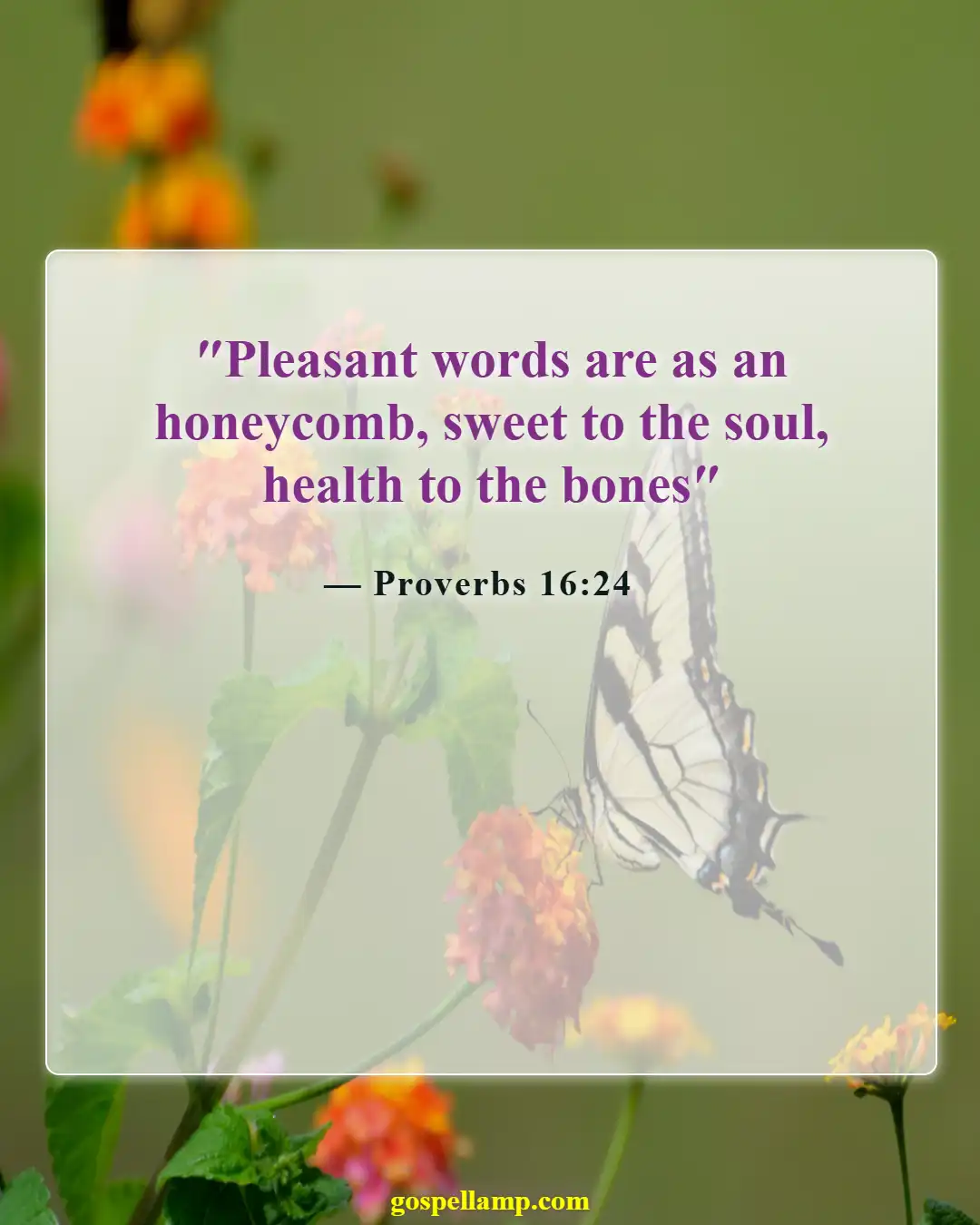
“Pleasant words are as an honeycomb, sweet to the soul, health to the bones”— Proverbs 16:24
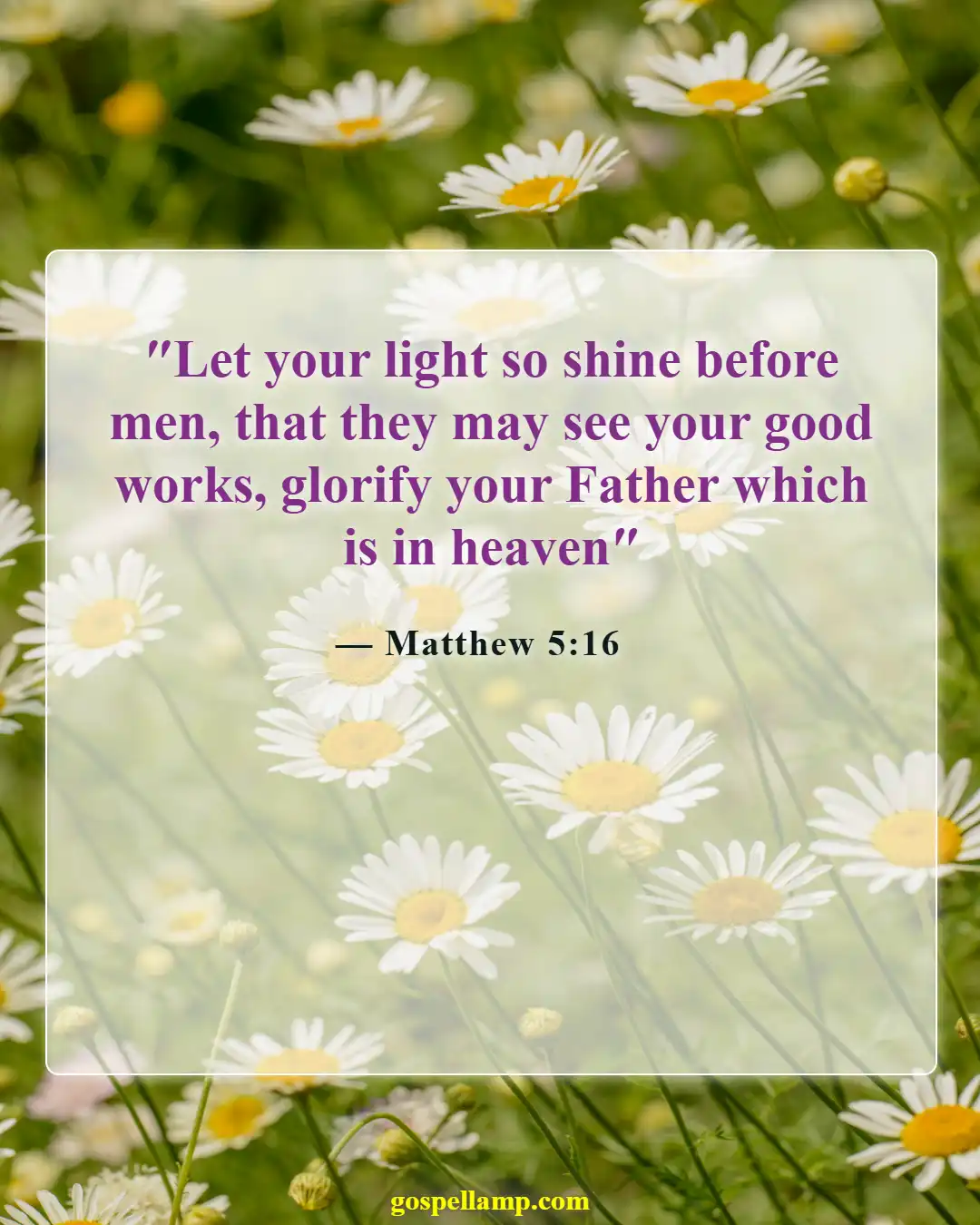
“Let your light so shine before men, that they may see your good works, glorify your Father which is in heaven”— Matthew 5:16
“Let us not be weary in well doing: for in due season we shall reap, if we faint not”— Galatians 6:9

“But to do good to communicate forget not: for with such sacrifices God is well pleased”— Hebrews 13:16
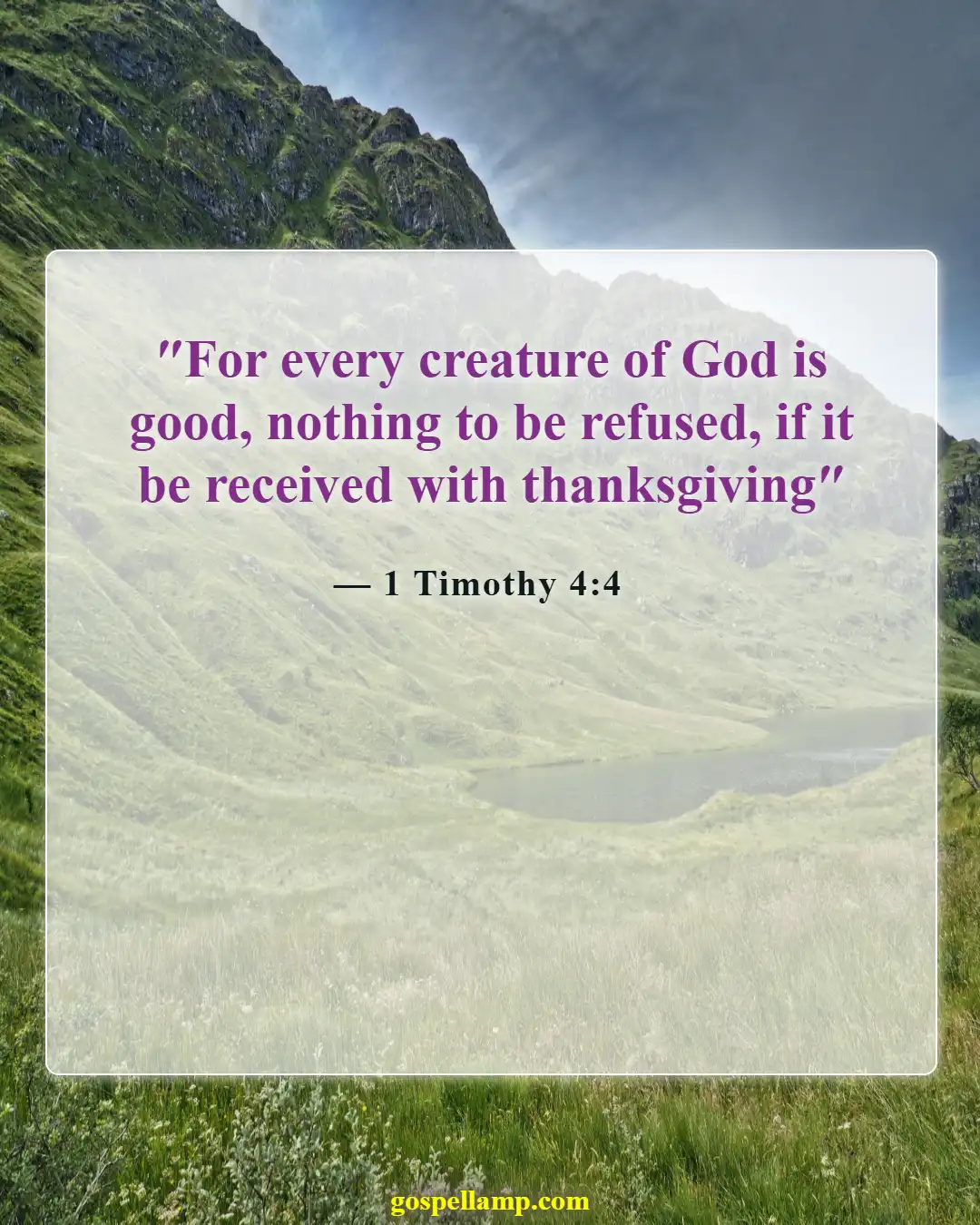
“For every creature of God is good, nothing to be refused, if it be received with thanksgiving”— 1 Timothy 4:4
Consequences of Neglecting God’s Creation in Scripture
The Bible warns of the consequences of neglecting the environment, reminding us that our actions have repercussions. Ignoring our responsibility can lead to destruction and loss, both for the earth and for our own spiritual well-being. By taking these warnings seriously, we can choose a path of restoration and healing, aligning ourselves with God’s intentions.
“Woe unto them that join house to house, that lay field to field, till there be no place, that they may be placed alone in the midst of the earth”— Isaiah 5:8
“Hear the word of the Lord , ye children of Israel: for the Lord hath a controversy with the inhabitants of the land, because there is no truth, nor mercy, nor knowledge of God in the landBy swearing, lying, killing, stealing, committing adultery, they break out, blood toucheth bloodTherefore shall the land mourn, every one that dwelleth therein shall languish, with the beasts of the field, with the fowls of heaven; yea, the fishes of the sea also shall be taken away”— Hosea 4:1-3
“Son of man, prophesy against the shepherds of Israel, prophesy, say unto them, Thus saith the Lord God unto the shepherds; Woe be to the shepherds of Israel that do feed themselves! should not the shepherds feed the flocks?Ye eat the fat, ye clothe you with the wool, ye kill them that are fed: but ye feed not the flockThe diseased have ye not strengthened, neither have ye healed that which was sick, neither have ye bound up that which was broken, neither have ye brought again that which was driven away, neither have ye sought that which was lost; but with force with cruelty have ye ruled them”— Ezekiel 34:2-4
“How long shall the land mourn, the herbs of every field wither, for the wickedness of them that dwell therein? the beasts are consumed, the birds; because they said, He shall not see our last end”— Jeremiah 12:4
“For the creature was made subject to vanity, not willingly, but by reason of him who hath subjected the same in hopeBecause the creature itself also shall be delivered from the bondage of corruption into the glorious liberty of the children of GodFor we know that the whole creation groaneth travaileth in pain together until now”— Romans 8:20-22
“I also have given you cleanness of teeth in all your cities, want of bread in all your places: yet have ye not returned unto me, saith the LordAnd also I have withholden the rain from you, when there were yet three months to the harvest: I caused it to rain upon one city, caused it not to rain upon another city: one piece was rained upon, the piece whereupon it rained not witheredSo two or three cities wandered unto one city, to drink water; but they were not satisfied: yet have ye not returned unto me, saith the LordI have smitten you with blasting mildew: when your gardens your vineyards your fig trees your olive trees increased, the palmerworm devoured them: yet have ye not returned unto me, saith the Lord”— Amos 4:6-9
Conclusion
Throughout Scripture, we discover that caring for creation is not merely an environmental suggestion but a divine mandate rooted in God’s character and our identity as His image-bearers. The Bible consistently teaches that our relationship with creation reflects our relationship with the Creator.
By studying these passages, we learn that stewardship requires both humility and responsibility. We are called to recognize God’s sovereignty over all things while accepting our role as caretakers of His handiwork. This understanding transforms how we approach daily choices—from resource consumption to environmental decisions.
To apply this knowledge meaningfully, we must view creation care as spiritual practice, not burden. When we honor God’s creation through conscious action, we worship Him authentically and demonstrate obedience to His Word. This might involve simple practices like reducing waste, protecting wildlife, or advocating for environmental justice.
The Bible invites us to see creation not as a tool for exploitation but as a sacred trust. As we internalize these truths and align our lives with Scripture’s teaching, we become agents of restoration and stewardship. By living out these principles daily, we honor God’s creative work and fulfill our calling as faithful witnesses to His lordship over all creation.