
If you’re seeking guidance on greed and selfishness from Scripture, this content is exactly what you need. The Bible offers profound wisdom about these destructive tendencies that damage our spiritual lives and relationships. Throughout Scripture, we discover powerful verses that illuminate why greed corrupts our hearts and how selfishness distances us from God’s purpose. This collection of Bible verses will deepen your understanding of these issues and provide biblical perspective on living generously and selflessly. Whether you’re struggling personally or seeking spiritual insight, these teachings will transform your perspective on material wealth and personal desires.
Introduction
Dear friends, let’s dive into the topic of greed and selfishness—two challenges that have been with us since the dawn of humanity. These issues are not just problems of our modern world; they are deeply embedded in our nature and often lead us away from the fulfilling life that God desires for us.
The Bible teaches us that greed is more than just a desire for money or things. It’s a condition of the heart, a belief that having more will bring us happiness, security, or worth. But in reality, greed is a never-ending cycle that leaves us feeling empty. No matter how much we acquire, it never seems to be enough.
Consider the story of the rich young ruler from the Gospels. He had everything—wealth, status, and respect—but when Jesus called him to give it all up and follow Him, the young man couldn’t do it. His possessions held more value to him than the promise of eternal life. This is what greed does; it blinds us to what truly matters.
In the Old Testament, there are many accounts of people who chased after wealth without considering justice or compassion. Some kings and wealthy individuals prioritized their own gain over the well-being of others, leading to their downfall. Their stories remind us that accumulating wealth without a spiritual foundation ultimately leads to emptiness.
But here’s the hopeful message: the Bible doesn’t just point out these problems; it offers us a way out. Jesus taught us to focus on heavenly treasures rather than earthly ones. He lived a life of generosity and compassion, showing us that true wealth comes from having a generous heart and caring for others.
The solution to greed is found in gratitude and generosity. When we appreciate what we have, greed loses its hold on us. By giving freely to others, we discover a joy that no amount of material goods can provide. We break free from selfishness by shifting our focus from ourselves to those around us and from temporary treasures to eternal values.
Let’s open our hearts to these lessons and strive to live a life that reflects gratitude, generosity, and genuine care for others.
Understanding Greed and Selfishness in Biblical Context
Greed and selfishness are often seen as natural human tendencies, but the Bible offers a different perspective. These traits can lead us away from a life of fulfillment and into a cycle of dissatisfaction. By examining the biblical context, we gain insight into how our desires can overshadow our spiritual well-being and relationships with others. Understanding this helps us to strive for a more compassionate and generous life.
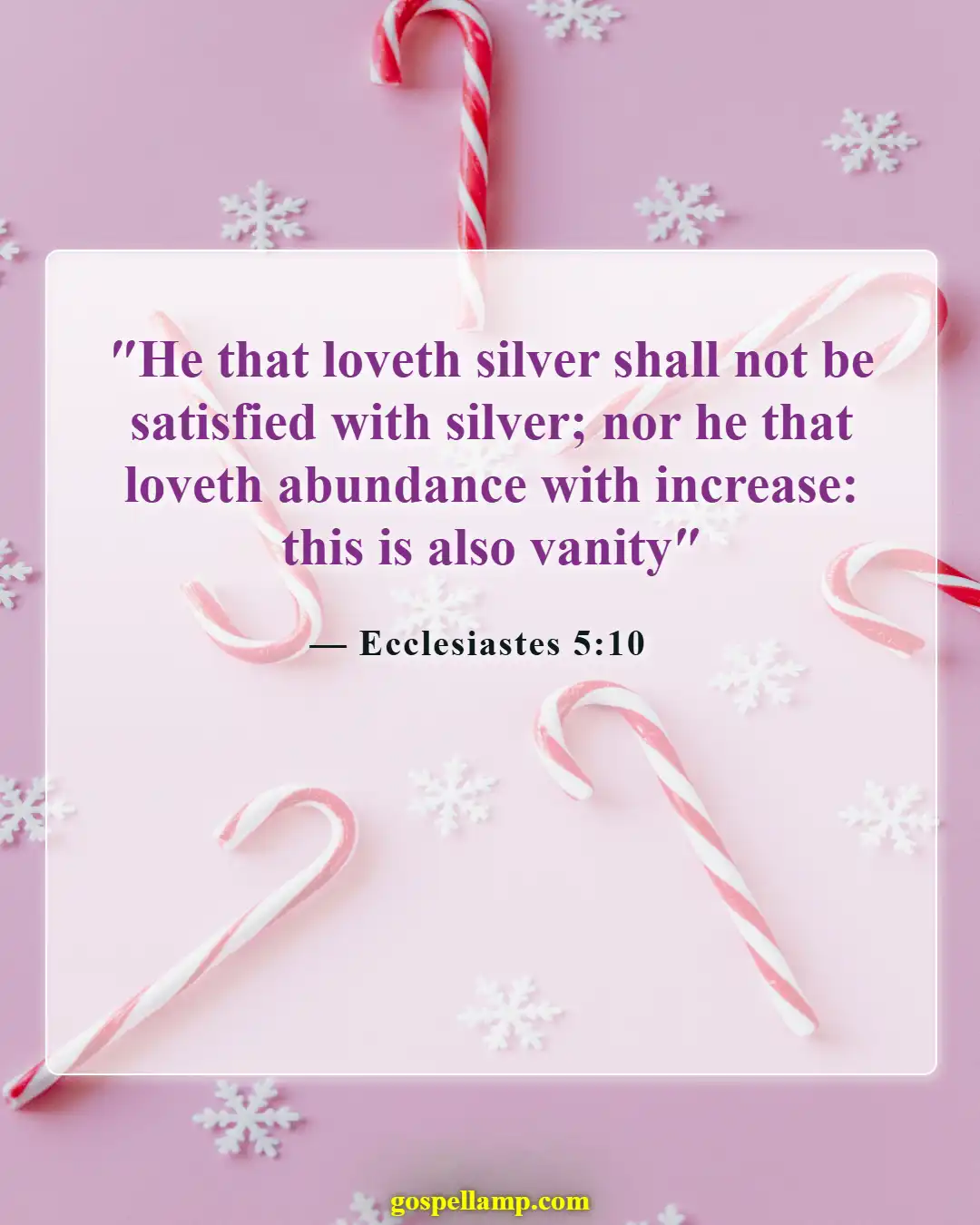
“He that loveth silver shall not be satisfied with silver; nor he that loveth abundance with increase: this is also vanity”— Ecclesiastes 5:10

“He that is of a proud heart stirreth up strife: but he that putteth his trust in the Lord shall be made fat”— Proverbs 28:25

“For the love of money is the root of all evil: which while some coveted after, they have erred from the faith, pierced themselves through with many sorrows”— 1 Timothy 6:10

“Ye lust, have not: ye kill, desire to have, cannot obtain: ye fight war, yet ye have not, because ye ask notYe ask, receive not, because ye ask amiss, that ye may consume it upon your lusts”— James 4:2-3
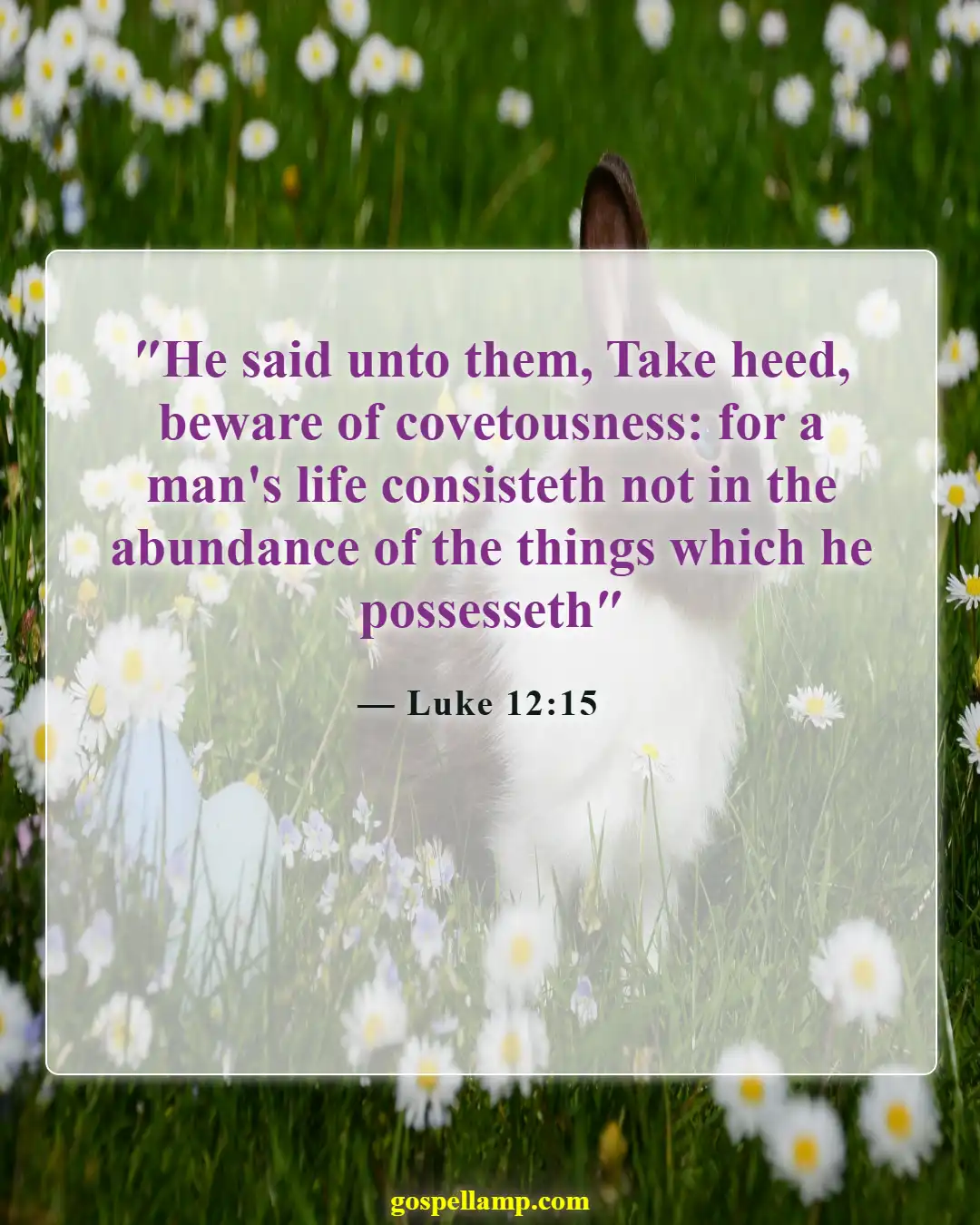
“He said unto them, Take heed, beware of covetousness: for a man’s life consisteth not in the abundance of the things which he possesseth”— Luke 12:15

“No man can serve two masters: for either he will hate the one, love the other; or else he will hold to the one, despise the other. Ye cannot serve God mammon”— Matthew 6:24
Old Testament Warnings Against Greed and Material Possessions
The Old Testament is rich with wisdom regarding the dangers of prioritizing wealth and possessions over spiritual values. These ancient texts remind us that pursuing material gain can lead to a hardening of the heart. By focusing on what truly matters, we learn to appreciate the blessings we have and use them to help others, rather than hoard them for ourselves.

“He that is greedy of gain troubleth his own house; but he that hateth gifts shall live”— Proverbs 15:27
“There is a sore evil which I have seen under the sun, namely, riches kept for the owners thereof to their hurt”— Ecclesiastes 5:13
“Yea, they are greedy dogs which can never have enough, they are shepherds that cannot understand: they all look to their own way, every one for his gain, from his quarter”— Isaiah 56:11
“For from the least of them even unto the greatest of them every one is given to covetousness; from the prophet even unto the priest every one dealeth falsely”— Jeremiah 6:13
“They covet fields, take them by violence; houses, take them away: so they oppress a man his house, even a man his heritage”— Micah 2:2
“Woe to him that coveteth an evil covetousness to his house, that he may set his nest on high, that he may be delivered from the power of evilThou hast consulted shame to thy house by cutting off many people, hast sinned against thy soulFor the stone shall cry out of the wall, the beam out of the timber shall answer it”— Habakkuk 2:9-11
Jesus’ Teachings on Greed, Wealth, and Generosity
Jesus’ teachings challenge us to view wealth and possessions through a spiritual lens. He encourages us to seek treasures in heaven rather than earthly riches. His messages about generosity and selflessness inspire us to think of others and to use our resources to uplift those in need. This perspective transforms our view of abundance as a tool for good, rather than a goal in itself.
“Sell that ye have, give alms; provide yourselves bags which wax not old, a treasure in the heavens that faileth not, where no thief approacheth, neither moth corruptethFor where your treasure is, there will your heart be also”— Luke 12:33-34
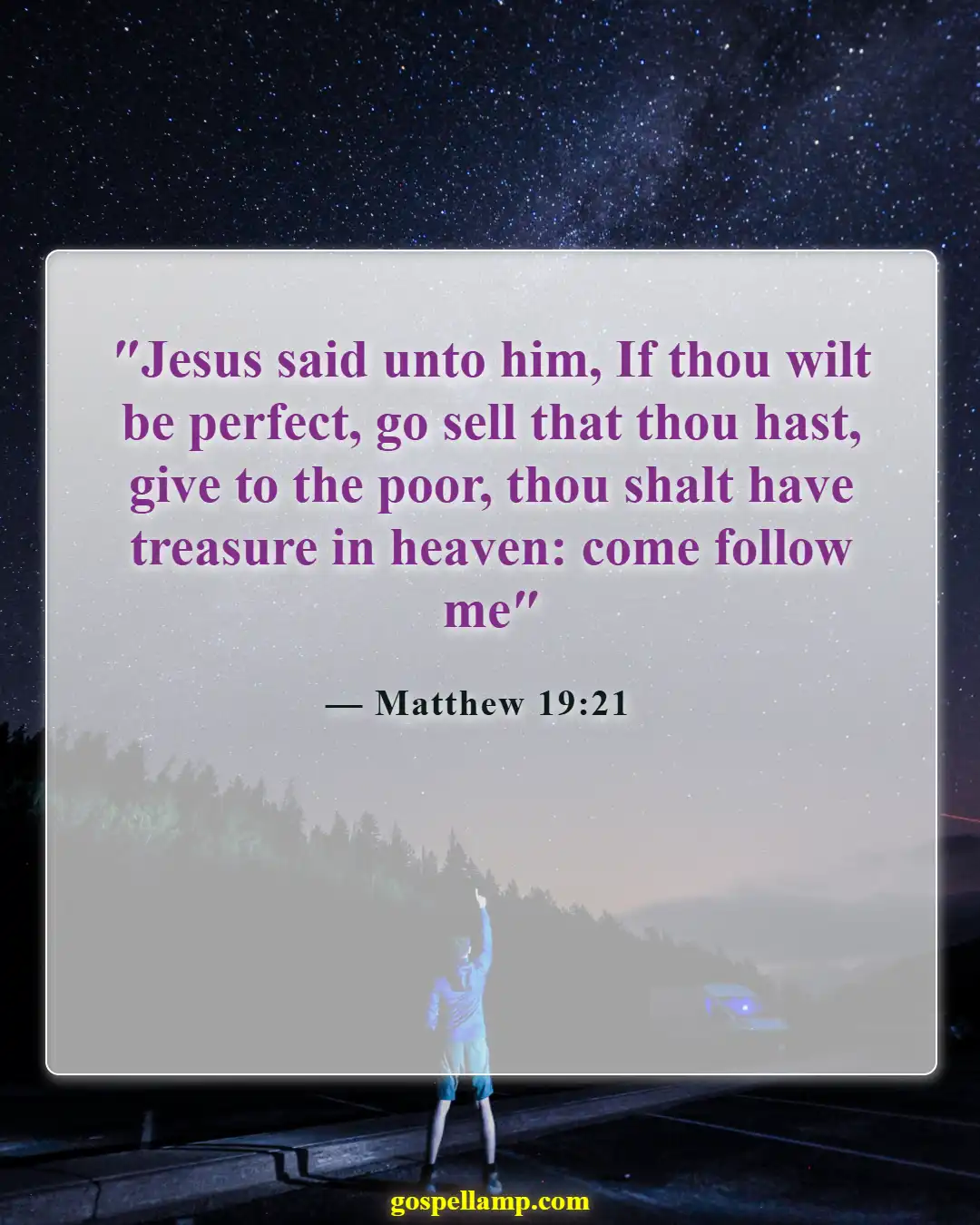
“Jesus said unto him, If thou wilt be perfect, go sell that thou hast, give to the poor, thou shalt have treasure in heaven: come follow me”— Matthew 19:21

“It is easier for a camel to go through the eye of a needle, than for a rich man to enter into the kingdom of God”— Mark 10:25

“No servant can serve two masters: for either he will hate the one, love the other; or else he will hold to the one, despise the other. Ye cannot serve God mammon”— Luke 16:13
“Lay not up for yourselves treasures upon earth, where moth rust doth corrupt, where thieves break through stealBut lay up for yourselves treasures in heaven, where neither moth nor rust doth corrupt, where thieves do not break through nor stealFor where your treasure is, there will your heart be also”— Matthew 6:19-21
“Give, it shall be given unto you; good measure, pressed down, shaken together, running over, shall men give into your bosom. For with the same measure that ye mete withal it shall be measured to you again”— Luke 6:38
“Labour not for the meat which perisheth, but for that meat which endureth unto everlasting life, which the Son of man shall give unto you: for him hath God the Father sealed”— John 6:27
New Testament Verses About Selfishness and Self-Centeredness
In the New Testament, we find guidance on how to overcome selfish tendencies. The teachings encourage us to live in harmony with others, placing their needs alongside our own. This shift from self-centeredness to community-centeredness fosters a spirit of unity and love. By following these teachings, we become more like the image of Christ, showing kindness and consideration to all.
“Let nothing be done through strife or vainglory; but in lowliness of mind let each esteem other better than themselvesLook not every man on his own things, but every man also on the things of others”— Philippians 2:3-4

“For men shall be lovers of their own selves, covetous, boasters, proud, blasphemers, disobedient to parents, unthankful, unholy”— 2 Timothy 3:2
“But unto them that are contentious, do not obey the truth, but obey unrighteousness, indignation wrath”— Romans 2:8
“For where envying strife is, there is confusion every evil work”— James 3:16
“Now the works of the flesh are manifest, which are these; Adultery, fornication, uncleanness, lasciviousnessIdolatry, witchcraft, hatred, variance, emulations, wrath, strife, seditions, heresiesEnvyings, murders, drunkenness, revellings, such like: of the which I tell you before, as I have also told you in time past, that they which do such things shall not inherit the kingdom of God”— Galatians 5:19-21
The Dangers of Greed: What Does the Bible Say?
The Bible vividly illustrates the perils of greed, warning us that it can lead to spiritual emptiness and relational discord. Greed blinds us to the needs of others and traps us in a cycle of dissatisfaction. By recognizing these dangers, we are better equipped to seek a life of contentment and peace, grounded in the values of faith and community.
“Nor thieves, nor covetous, nor drunkards, nor revilers, nor extortioners, shall inherit the kingdom of God”— 1 Corinthians 6:10

“For this ye know, that no whoremonger, nor unclean person, nor covetous man, who is an idolater, hath any inheritance in the kingdom of Christ of God”— Ephesians 5:5
“So are the ways of every one that is greedy of gain; which taketh away the life of the owners thereof”— Proverbs 1:19
“Mortify therefore your members which are upon the earth; fornication, uncleanness, inordinate affection, evil concupiscence, covetousness, which is idolatry”— Colossians 3:5
“The Pharisees also, who were covetous, heard all these things: they derided him”— Luke 16:14

“But they that will be rich fall into temptation a snare, into many foolish hurtful lusts, which drown men in destruction perdition”— 1 Timothy 6:9
Biblical Examples of Greed and Its Consequences
The Bible provides numerous examples of individuals whose lives were negatively impacted by greed. These stories serve as cautionary tales, reminding us that the pursuit of wealth can lead to moral and spiritual decay. By learning from these examples, we are encouraged to pursue a path of righteousness and generosity, avoiding the pitfalls of greed.
“When I saw among the spoils a goodly Babylonish garment, two hundred shekels of silver, a wedge of gold of fifty shekels weight, then I coveted them, took them; behold, they are hid in the earth in the midst of my tent, the silver under it”— Joshua 7:21
“It came to pass after these things, that Naboth the Jezreelite had a vineyard, which was in Jezreel, hard by the palace of Ahab king of SamariaAnd Ahab spake unto Naboth, saying, Give me thy vineyard, that I may have it for a garden of herbs, because it is near unto my house: I will give thee for it a better vineyard than it; or, if it seem good to thee, I will give thee the worth of it in moneyAnd Naboth said to Ahab, The Lord forbid it me, that I should give the inheritance of my fathers unto theeAnd Ahab came into his house heavy displeased because of the word which Naboth the Jezreelite had spoken to him: for he had said, I will not give thee the inheritance of my fathers. he laid him down upon his bed, turned away his face, would eat no breadBut Jezebel his wife came to him, said unto him, Why is thy spirit so sad, that thou eatest no bread?he said unto her, Because I spake unto Naboth the Jezreelite, said unto him, Give me thy vineyard for money; or else, if it please thee, I will give thee another vineyard for it: he answered, I will not give thee my vineyardAnd Jezebel his wife said unto him, Dost thou now govern the kingdom of Israel? arise, eat bread, let thine heart be merry: I will give thee the vineyard of Naboth the JezreeliteSo she wrote letters in Ahab’s name, sealed them with his seal, sent the letters unto the elders to the nobles that were in his city, dwelling with NabothAnd she wrote in the letters, saying, Proclaim a fast, set Naboth on high among the peopleAnd set two men, sons of Belial, before him, to bear witness against him, saying, Thou didst blaspheme God the king. then carry him out, stone him, that he may dieAnd the men of his city, even the elders the nobles who were the inhabitants in his city, did as Jezebel had sent unto them, as it was written in the letters which she had sent unto themThey proclaimed a fast, set Naboth on high among the peopleAnd there came in two men, children of Belial, sat before him: the men of Belial witnessed against him, even against Naboth, in the presence of the people, saying, Naboth did blaspheme God the king. Then they carried him forth out of the city, stoned him with stones, that he diedThen they sent to Jezebel, saying, Naboth is stoned, is deadAnd it came to pass, when Jezebel heard that Naboth was stoned, was dead, that Jezebel said to Ahab, Arise, take possession of the vineyard of Naboth the Jezreelite, which he refused to give thee for money: for Naboth is not alive, but deadAnd it came to pass, when Ahab heard that Naboth was dead, that Ahab rose up to go down to the vineyard of Naboth the Jezreelite, to take possession of it”— 1 Kings 21:1-16
“But Gehazi, the servant of Elisha the man of God, said, Behold, my master hath spared Naaman this Syrian, in not receiving at his hands that which he brought: but, as the Lord liveth, I will run after him, take somewhat of himSo Gehazi followed after Naaman. when Naaman saw him running after him, he lighted down from the chariot to meet him, said, Is all well?he said, All is well. My master hath sent me, saying, Behold, even now there be come to me from mount Ephraim two young men of the sons of the prophets: give them, I pray thee, a talent of silver, two changes of garmentsAnd Naaman said, Be content, take two talents. he urged him, bound two talents of silver in two bags, with two changes of garments, laid them upon two of his servants; they bare them before himAnd when he came to the tower, he took them from their hand, bestowed them in the house: he let the men go, they departedBut he went in, stood before his master. Elisha said unto him, Whence comest thou, Gehazi? he said, Thy servant went no whitherAnd he said unto him, Went not mine heart with thee, when the man turned again from his chariot to meet thee? Is it a time to receive money, to receive garments, oliveyards, vineyards, sheep, oxen, menservants, maidservants?The leprosy therefore of Naaman shall cleave unto thee, unto thy seed for ever. he went out from his presence a leper as white as snow”— 2 Kings 5:20-27
“But a certain man named Ananias, with Sapphira his wife, sold a possessionAnd kept back part of the price, his wife also being privy to it, brought a certain part, laid it at the apostles’ feetBut Peter said, Ananias, why hath Satan filled thine heart to lie to the Holy Ghost, to keep back part of the price of the land?Whiles it remained, was it not thine own? after it was sold, was it not in thine own power? why hast thou conceived this thing in thine heart? thou hast not lied unto men, but unto GodAnd Ananias hearing these words fell down, gave up the ghost: great fear came on all them that heard these thingsAnd the young men arose, wound him up, carried him out, buried himAnd it was about the space of three hours after, when his wife, not knowing what was done, came inAnd Peter answered unto her, Tell me whether ye sold the land for so much? she said, Yea, for so muchThen Peter said unto her, How is it that ye have agreed together to tempt the Spirit of the Lord? behold, the feet of them which have buried thy husband are at the door, shall carry thee outThen fell she down straightway at his feet, yielded up the ghost: the young men came in, found her dead, carrying her forth, buried her by her husband”— Acts 5:1-10
“It came to pass in an eveningtide, that David arose from off his bed, walked upon the roof of the king’s house: from the roof he saw a woman washing herself; the woman was very beautiful to look uponAnd David sent enquired after the woman. one said, Is not this Bathsheba, the daughter of Eliam, the wife of Uriah the Hittite?David sent messengers, took her; she came in unto him, he lay with her; for she was purified from her uncleanness: she returned unto her house”— 2 Samuel 11:2-4
How to Overcome Greed: Biblical Principles for Contentment
Overcoming greed requires intentional focus on the values of contentment and gratitude. The Bible offers principles that guide us in cultivating a heart of peace, satisfied with what we have. By embracing these teachings, we learn to appreciate our blessings and to live a life of simplicity and joy, free from the constant desire for more.
“Not that I speak in respect of want: for I have learned, in whatsoever state I am, therewith to be contentI know both how to be abased, I know how to abound: every where in all things I am instructed both to be full to be hungry, both to abound to suffer need”— Philippians 4:11-12

“Let your conversation be without covetousness; be content with such things as ye have: for he hath said, I will never leave thee, nor forsake thee”— Hebrews 13:5
“But godliness with contentment is great gainFor we brought nothing into this world, it is certain we can carry nothing outAnd having food raiment let us be therewith content”— 1 Timothy 6:6-8
“Therefore I say unto you, Take no thought for your life, what ye shall eat, or what ye shall drink; nor yet for your body, what ye shall put on. Is not the life more than meat, the body than raiment?Behold the fowls of the air: for they sow not, neither do they reap, nor gather into barns; yet your heavenly Father feedeth them. Are ye not much better than they?Which of you by taking thought can add one cubit unto his stature?why take ye thought for raiment? Consider the lilies of the field, how they grow; they toil not, neither do they spinAnd yet I say unto you, That even Solomon in all his glory was not arrayed like one of theseWherefore, if God so clothe the grass of the field, which to day is, to morrow is cast into the oven, shall he not much more clothe you, O ye of little faith?Therefore take no thought, saying, What shall we eat? or, What shall we drink? or, Wherewithal shall we be clothed?(For after all these things do the Gentiles seek:) for your heavenly Father knoweth that ye have need of all these thingsBut seek ye first the kingdom of God, his righteousness; all these things shall be added unto youTake therefore no thought for the morrow: for the morrow shall take thought for the things of itself. Sufficient unto the day is the evil thereof”— Matthew 6:25-34
“Remove far from me vanity lies: give me neither poverty nor riches; feed me with food convenient for meLest I be full, deny thee, say, Who is the Lord ? or lest I be poor, steal, take the name of my God in vain”— Proverbs 30:8-9
Generosity and Giving: The Biblical Antidote to Selfishness
Generosity is presented in the Bible as a powerful antidote to selfishness. By giving freely and joyfully, we break the chains of self-centeredness and open our hearts to the transformative power of love and community. This practice not only benefits others but also enriches our own lives, leading us to experience the profound joy that comes from selfless giving.
“But this I say, He which soweth sparingly shall reap also sparingly; he which soweth bountifully shall reap also bountifullyEvery man according as he purposeth in his heart, so let him give; not grudgingly, or of necessity: for God loveth a cheerful giver”— 2 Corinthians 9:6-7
“I have shewed you all things, how that so labouring ye ought to support the weak, to remember the words of the Lord Jesus, how he said, It is more blessed to give than to receive”— Acts 20:35
“There is that scattereth, yet increaseth; there is that withholdeth more than is meet, but it tendeth to povertyThe liberal soul shall be made fat: he that watereth shall be watered also himself”— Proverbs 11:24-25

“Heal the sick, cleanse the lepers, raise the dead, cast out devils: freely ye have received, freely give”— Matthew 10:8
“But whoso hath this world’s good, seeth his brother have need, shutteth up his bowels of compassion from him, how dwelleth the love of God in him?My little children, let us not love in word, neither in tongue; but in deed in truth”— 1 John 3:17-18
Conclusion
The Bible presents a clear and consistent message about greed and selfishness, demonstrating that these vices corrupt our spiritual lives and damage our relationships with God and others. Throughout Scripture, we see that material possessions should never become our focus or define our worth. Instead, we are called to cultivate contentment, generosity, and a heart centered on God’s kingdom.
To apply these biblical principles, we must examine our own hearts and honestly assess where our priorities lie. Ask yourself: Are material possessions consuming your thoughts? Do you struggle with generosity? These questions help us identify areas requiring spiritual growth.
The practical application involves intentional action—practicing generosity, sharing with those in need, and redirecting our desires toward eternal values rather than temporary wealth. We should view our resources as blessings entrusted to us by God, meant to be used wisely and shared generously.
Understanding God’s Word requires personal reflection and commitment to change. By studying these passages and allowing the Holy Spirit to transform our hearts, we can break free from greed’s grip. Ultimately, the Bible teaches us that true wealth lies in our relationship with God and our ability to love and serve others selflessly.